My blog has moved!

You should be automatically redirected in 6 seconds. If not, visit
http://westerad.com
and update your bookmarks.

Showing posts with label Marketing. Show all posts

Monday, March 09, 2009

Marketing Nostalgia

These throwback boxes from General Mills are a lot of fun. They are nostalgic and full of retro kitsch. Plus you get a shirt out of the deal. You walk away smiling and probably carrying a box of something you haven't had since you were a kid. That's what nostalgia does. As a marketer you can't go to this well too often but every now and then, after just enough time has passed, you can get out some artifact that will make your customers smile with childlike delight as you tug on their heartstrings and subtly remind them that your brand has been with them through it all.

Got some old signage or advertisements collecting dust in a closet or storage facility? Get them out and take them to your next meeting. Put them up in your business. Pretty soon your team will be smiling and together you'll come up with a great way to re-introduce these memories back into your brand's quilted tapestry.

Tuesday, February 03, 2009

Don't Forget About TIM

Recently at seminar on ROI (the one where I sat next to Dave Power), the speaker strongly advocated for holding true to the old Drucker axiom that's also one of my favs: you can't manage what you don't measure. At the same time he voiced concern over putting too much stock in "the myth of the last impression." This means that when customers are asked to identify what lead them into the store or to make their purchase, they often cite the last brand impression they experienced when, in reality, what moved them to action was actually several brand impressions working in concert.

As any good Lutheran would say, this is most certainly true. Branding is an experience that is a sum total of many parts; not a sequential and linear path where a sale only occurs after a set point. This is not to say that you should throw measurement out with the bathwater. Rather, you need to look for more holistic means of measurement. Instead of asking the ubiquitous how did you hear about us? with a list of media options where just one lucky winner is checked, perhaps the new customer should select which combination of media inspired them to act.

Years ago, Dean gave a speech that he called the "TIM Talk" at the National Office Machine Dealers Association convention. TIM is an acronym Dean developed that stands for Total Image Marketing. In his speech, he outlined a strategy for holistic branding that covers all touchpoints and can be applied to any media and any business. He's thinking of updating it and giving it again. I think that there's never been a better time for TIM.

Photo credit thegloaming

Saturday, January 17, 2009

Change – Available Now!

With inauguration day fast approaching it seems like everyone is trying to cash in on the act before Tuesday. Some are relevant, such as the endless droves of commemorative Obama plates, coins, magazines, while some struggle a bit trying to force a fit. 

I snapped this photo from my local grocery store. Someone has obviously sold the chain on the limited edition MAKING HISTORY cardboard bookshelf (they somehow manage to reduce MAKING HISTORY to a SUNDAY! SUNDAY! SUNDAY!-like call to action). Just put this baby together and load 'em up with all the Obama books you can find and your store will be on top of all of this "Change fever." The problem? Look at the bottom shelf. They ran out of legit and pulpy Barack books and decided to face up the shelf with some Grishams from the trade paperbacks. Dreams from My Father, The Audacity of Hope, The Partner, The Summons ...

The point? Relevancy counts when you decide to go topical. If you have a relevant way to tie into the news of the day then go ahead. But if you end up stretching your brand's story in a way that doesn't make sense then you look like the rest of the masses trying to cash in on the story du jour. 

Wednesday, January 14, 2009

Why Newspapers Are in Trouble

From my snow drift. I am not a subscriber but get many freebies even though I read it all online and have for some time. I wonder how much longer this strategy will hold up? Overall the free sample marketing strategy is still alive and well but for newspapers the internet killed it for good. Because now it's all free online. 

Seth really said it best earlier today.

Tuesday, September 25, 2007

Anatomy of an Ad: Fred’s New Job …

If you’ve watched TV lately you’ve noticed that Fred Flintstone has a new job … pitching Geico. Yup, Fred and Wilma have joined the ranks for the gecko, Little Richard, and, of course, the ubiquitous cavemen (soon to be seen in primetime).


Geico has always been a great case study of communicating a consistent message in creative ways to different market segments. In the end, they have a parity problem. Their message is the same as other insurance companies — they save you money. So they rely on clutter-cutting advertising broken out by market segment to get people’s attention. The cavemen focus on the much sought-after young male demographic, the gecko (for some reason) tested really well with women in their 40s, and boomers and up are the target of the Little Richard/Peter Graves-assisted customer testimonials.


The new wave of spots trades the cavemen (they’re busy with their sitcom after all) for the Beverly Hillbillies, The Flintstones, and Cabbage Patch Kids. All are presented in faux E! True Hollywood Story fashion and position Geico as a money-saving solution that rescued them from their wayward lives of being a celebrity has-beens.


Note the segmentation at work here. I would venture to say that between the shows/dolls listed above, one or more of them recalls a nostalgic feeling in you. Flintstones and Hillbillies for boomers and Cabbage Patch Kids for Gen X and Y. A fun character from your childhood being parodied in tabloid fashion? You’ve just gotta watch it.


The point? Segment your communications. And as confusing as it sounds, be the same but different. By that I mean, at the heart of your strategy should be a very simple message (Geico saves you money — painfully simple, almost too simple if that wasn’t something that appealed to everyone!). Then, identify who you want to target and wrap this simple message in a creative vehicle that (a) gets their attention and (b) makes them stick around long enough to internalize your brand’s message. Easy, right …?


P.S. You can view all of the Geico creative here.

Monday, January 01, 2007

Did you know ...

... that marketing campaigns can sponsor events? I knew companies could but I got introduced to this concept just now on the Rose Bowl where viewers will be treated to the "Built Ford Tough Postgame Show."

I'm not sure how I feel about this one. I mean, I understand where they were coming from - "We need to embed our messaging into the sponsorship, etc" but it doesn't seem like a good fit. First, "Built Ford Tough Postgame Show" does not flow trippingly off the tongue. Second, a slogan/idea/positioning statement/sentence fragment (!?!) is a confusing descriptor for a postgame show. It's like Home Depot sponsoring it and calling it the "You Can Do It. We Can Help Postgame Show."

On the other hand. They're Ford. They've been dropping huge chunks of change on big sponsorships and advertising for years. I think it's safe to assume that most people know who they are. So why not use this opportunity to communicate something about the brand? Good so far but where the Motor City giant veers off track is in it's messaging.

"Built Ford Tough" is more business as usual and in case anyone has been living under a rock, the landscape in the automotive industry has been changing dramatically - especially for the Big 3. One idea would have been to take one of their new models that they are pinning their '07 hopes on and have that sponsor it. Like the "Ford Edge Postgame Show." Or the "Bold Moves: The Ford Postgame Show." That is their current slogan and actually sounds exciting and is relevant to the event.

Just my thoughts. You got any? Oh ... Happy 2007.

Tuesday, December 19, 2006

Redefining Breakfast


Last night I caught the founders of Cereality, David Roth and Rick Bacher, on The Big Idea with Donny Deutsch. Now this truly is a remarkable concept - a bar/cafe that serves cereal. Not high-end, gourmet cereal. Just plain 'ol Apple Jacks, Lucky Charms, Frosted Flakes, etc. But you - the customer - gets complete control of the experience. You can lay down a bed of delicious Golden Grahams, top them off with a few Cocoa Puffs, and add toppings like bananas to boot.

And the innovation doesn't stop at the door. They've invented a user-friendly (and environmentally friendly) container with a clever spoon that has a flue in it for sucking the sweet, cereal-flavored milk (left). This is a perfect example of taking an activity that users love and building an experience around it. And you don't sit at a table either. You stand at kitchen-island like counters.

Roth and Bacher came up with a winning concept. All of the parts already existed. All they had to do was connect the dots. Oh, and the pisser? They peddled this idea around to all of the cereal companies to solicit partnership opportunities and all they got was "good luck." All except Quaker Oats, who was an early supporter and gave these innovators some start up cash. (There should be an award for companies that serve as "business angels" and support ideas like this but because there's not I'll lay off complaining about the oat smell in Cedar Rapids.)

The Point? It's real "in" right now to talk about how companies like YouTube are changing the landscape of business and culture but this kind of shift can happen offline as well. Companies like Cereality are taking what's successful about YouTube - an experience custom-sculpted
around the user - and applying it successfully offline.

Monday, December 04, 2006

Black Friday on Sunday Morning

There was a great segment yesterday on CBS Sunday Morning talking about retail strategies for the holiday season. CBS's Anthony Mason gets advice from two of my favorite marketing gurus - Seth Godin and Paco Underhill, retail anthropologist (love that title) and author of Why We Buy. And don't think the segment only applies if you're selling sweaters at the Gap or other holiday goodies. The retail tenets outlined apply to your online store as well. This story and Underhill's book can be instrumental in refining your both your physical and online retail experience.

Wednesday, November 29, 2006

Whole Foods Gets It

There was a great story on All Things Considered last night about the in-store artists that Whole Foods employs to create their unique signage. They employ them full time and provide health benefits. Wow. Read or listen to the story and if you're not already familiar with them, learn more about this remarkable business.

Wednesday, October 11, 2006

Mousetraps and Marketing Metrics

It's that time of year again. Last night I was walking through my basement and I turned on the furnace room light in time to see a mouse scurry away through a crack in the wall. Luckily, I had just reset all of my non-humane, old-school mousetraps with fresh peanut butter over the weekend.

As I was resetting the traps, my thoughts wandered to marketing metrics. (Yes. I am insane.) You see, for one of my clients the past month also marked the beginning of their fiscal year and they have been celebrating with a lot of strategizing and planning.

How does placing mousetraps throughout your home relate to planning your marketing? Easy. As I was dropping off the traps I thought of my "mousetrap results" from the past year. The two mice I caught were from the same trap location (downstairs bathroom next to the shower). In my mousetrap planning this is the equivalent of a marketing campaign that works. All six other traps that I've set are essentially unproven as they have yet to yield a result. Did I do anything different? No. I set all of the traps in the exact same location I've always set them.

Was this responsible, results-driven planning? If I wanted to make decisions based on actual results I should have set the proven trap next to the shower and tested some new trap locations. But I didn't and the only reason was because I didn't bother to consider the results.

Now you may think that these are just mousetraps and marketing planning is a much bigger deal that always gets more careful consideration. Really? Take a step back and look at your current plans? How many of your proven efforts from last year are you repeating? (Your answer should be all of them.) How many of your unproven efforts are scheduled to be repeated this year? (Your answer should be none of them.)

Or, worse yet, are you in the dark on your efforts because you don't track and measure them. To continue with my mousetrapping metaphor, that would be like setting several trays of poison out and a random dead mouse shows up. Which poison tray (marketing campaign) got the mouse (your results)? You'll never know. So you also need to take an even bigger step back and make sure you are measuring your efforts. Remember, you can't manage what you don't measure. For my money, you can't beat actionable ads and mousetraps that kill. Both are dependable, measurable, and provide results.

The Point? It's simple. Make sure you are tracking and measuring every ad, marketing campaign, and promotion you do. Then when it comes time to plan, repeat what really worked, try to fix what kind of worked, and test something new in place of the stuff that failed. Failure isn't bad. My direct marketing mentor always said you either want a clear success or a clear failure because they give you a result that you can read and take action on. In other words, you know something. So take some time and think through where you "trap your mice and your customers and remember you can improve both if you know where your results are coming from.

P.S. "Try something!" and "Test. Test. Test." are some of the rules of one of my favorite analytical minds, Dr. Gregory House of Fox's House M.D. This week one of my favorite business minds, Tom Peters, did a great post with a slide summing up "House-isms" that can be applied to direct marketing and really anything strategically focused. Enjoy.

Monday, August 07, 2006

The Little [BLANK] Book of [BLANK]

Want a short cut to titling/writing a book? Come up with a color and a subject of interest and you're halfway there (provided it's a specialty you know something about). Let's play ...

Color - Green; Subject - Landscaping =
The Little Green Book of Landscaping

Color - Orange; Subject - Spreadsheets =
The Little Orange Book of Spreadsheets

Color - Puce; Subject - Pool Skimming =The Little Puce Book of Pool Skimming

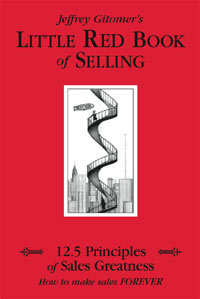
Laugh but these formulaic titles are everywhere. If you want a digestible diatribe on a particular subject (especially aspects of business) you can easily run to your bookseller or Amazon and pick up The Little Red Book of Selling, The Little Black Book of Connections (same author), and The Little Blue Book of Advertising.

There's probably more. I know there are across topics. Wanna learn golf? Check out Harvey Pennick's Little Red Book.
If you're feeling broad you can read the colorless but comprehensive Little Book of Food or The Little Book That Beats the Market.

Now these titles sound may sound dorky but the formula must be a successful one to merit the kind of play it's getting. Take it apart, though, and it's pretty simple to see why titles like this work:

'Little' implies that it's small and as few people read books anymore you may need to telegraph to the unidoctrinated that this book won't hurt you. Toss the color in and it sounds almost fun. Like a children's book (I think subconsciously this construction draws strength in it's motivational tie in with The Little Engine That Could). So we've communicated twice already that it's easy and we've added a dash of fun. 'Book of' is just the exposition leading up to your closer - the subject of interest. Not the most exciting part of all but if I need to step up my selling game, a title like this preceeding the subject helps the medicine go down.

When you look at it this way, it's kind of brilliant. This title formula is just a step above the lowballing and wildly popular Dummies and Idiots series (and I'm not turning my nose up - I just got the Idiot's Guide to Wine).

The Point? One of these books makes a respectable case for "thinking inside the box." Careful now. I'm not saying stifle creativity but rather there are tested formulas out there that are tried and true. You don't always have to reinvent the wheel. Save your wheelsmith-ery for when it's time to change the game entirely. And chances are that will be simply taking one of these tried and true methods and
turning it on it's side.

Tuesday, August 01, 2006

Is That Crap Under My Windshield Wiper or Guerrilla Marketing?

Or is it all in the eye of the beholder?

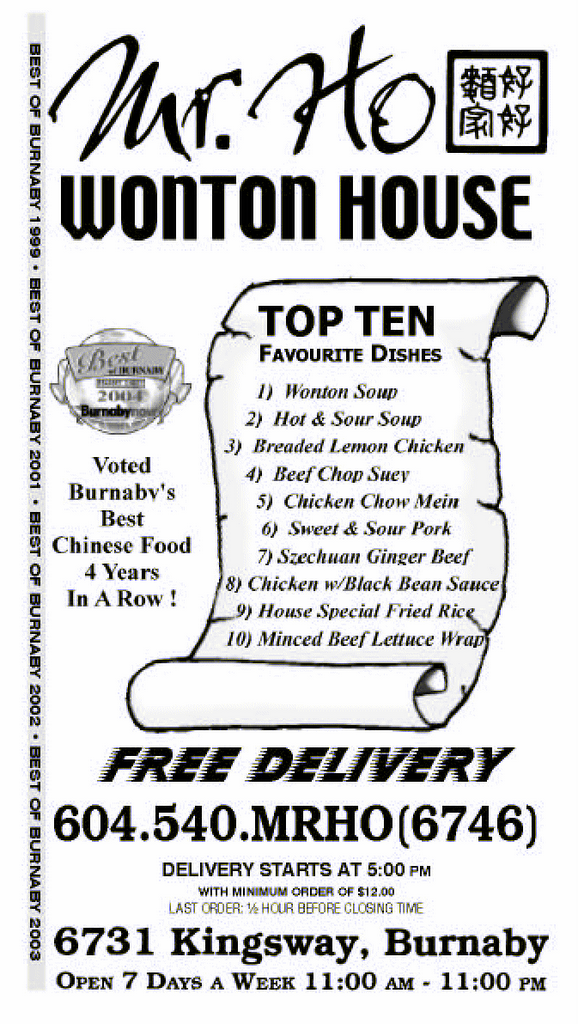
I had a philosophical discussion with a co-worker today about a Chinese restaurant menu that got shoved under everyone's windshield wipers in the parking lot. I cited it as a prime example of guerrilla marketing gone wrong. I made my case by saying that the effort was untargeted (I, for example, hate Chinese food; therefore this offer is irrelevant to me). I could understand flyering someplace close by but this restaurant was hardly that. Plus they flyered an office with a huge dining center that is widely known to have decent food at unbeatable prices. Flyering any other lot in town would have been a better use your excess flyers.

I cite targeting as being a key distinction because that is what makes a marketing tactic like flyering unique and gives it the scrappy, strategic guerrilla-like quality. I was at a conference and a vendor flyered all of the attendees a rooms one morning with a special announcement. That's great. Across the hall? No flyers because the vendor only targeted their audience with this relevant message. In my mind there was nothing targeted about this menu thing. It didn't have proximity going for it (as I mentioned this place is across town). It wasn't appealing based on who was parking in the lot (we have a cafeteria). All they had left were people who like Chinese food. I think you could target better.

But I believe it was Tevye that said, "On the other hand ..." (Actually, it was my colleague Larry Miller who wished to remain anonymous. I shall refer to him as Chuck moving forward.)


Chuck said: Untargeted? Come now. Chinese food is a pretty ubiquitous food category. Why not carpet bomb parking lots of big employers? Plus employees of large offices have been known to keep menus on file for days when they feel like changing it up. And as direct marketing tells us, when you scale a program like this, only a handful need to convert to break even on the promotion (unless you print your menus on heavy, embossed stock and hire a Ph.D. to do your flyering).


So am I right or is Chuck? Dunno. I'm just a marketer. I say that not as a cop out but in my almighty deference to trackable results. Could be this menu thing sends the restaurant through the roof. But to quote a book I just began, "you can't manage what you don't measure." So in the end, flyer or don't flyer. You don't know for sure until you try it but you've got to track it so the next time the promo gets put on the table you have some results to make a more educated guess. NOTE: I didn't suggest that you'd know for sure but that experience gives you some intelligence to make a more educated guess the next time. Happy marketing.

FREE MARKETING ADVICE:
Incidentally, if the Chinese restaurant was my client and was hell bent on flyering with their menus here's what I'd do ... Print off some mailing labels with a special offer/call to action: "Bring this menu in for a 10% discount on your meal." That would be a simple, low-cost way to track your efforts and give you some insight into what's working. But we want them to keep their menus! Great, hook them up with a new one when they redeem the offer. Or just let them take it back with them. (And so what if they reuse it? It's still business that resulted from the sale.) But we want to flyer several different targets! How do we know which is which? Get different colored labels and color-code your targets. At the end of the day, you can track almost anything. And you should.

I love that ... "You can't manage what you don't measure."

Thursday, July 20, 2006

My Favorite Store That I Haven't Bought a Thing From (Yet)

Story time at the WesterBlog. Gather 'round ...

I run. Not real well but I run nonetheless. On Wednesdays I run with a group of triathalonians and ironmen. It's something of a brutal self abuse regimen. I run because I can't work out in any other way. I'm uncoordinated and have been banned from most sports involving a ball and I would rather drink paint thinner than sit in a weight room.

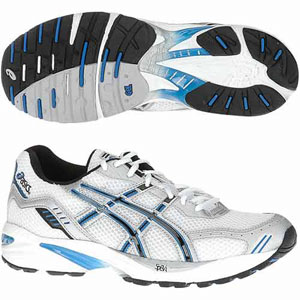
I digress! I also like running because I can think about things like ... my blog posting. For reasons like this running has become more and more important to me. Recently my old running shoes started cutting my Achilles. So I brilliantly surmised that it was new shoe time.

My favorite shoe store now is Running Wild here in Coralville. I say 'now' because did I go there when my shoes first gave out? No. I'm a cheap SOB and I went to Kohl's for $35 Nikes. They looked cool. But they started squeaking and squishing when I ran. I returned them but the other pair did the same thing. Basically, these shoes suck and you would be hard pressed to call the staff at Kohl's helpful on resolving the matter. So my shoes suck and I decide to just wear them until I've gotten my $35 out of them (it's been a couple of weeks -- I think I'm almost there).

Around this same time my wife got me a running hat for Father's Day from Running Wild. In the bag was an invite to their Sunday morning runs. A group meets at the store and runs as much as 16 miles or so. They've got maps, water along the route, and bagels and juice at the end in the store. But that's where the magic happens. That's where I got to hear their expert staff sell shoes.

"Well, these are my old shoes ..."
"Ah ... I see. It looks like you're right handed ..."
"Yes"
"... and you run on the outside of your foot."

All of that by looking at the old shoe! Maybe this isn't reading tea leaves like I think it is but compared with my Kohl's experience ...

"These shoes make a weird sound."
"Did you try on another pair?"
"Yeah. They make the sound too."
"Uhhh ... I don't know what to tell you."
"Can you recommend another pair?"
"I don't usually work in this department. Sorry."

Compared to that it was like hearing a mystic tell the future. (Instead of reading palms he was reading feet!) I made a decision then and there that this would be my new favorite shoe store and my replacement 'new' shoes would come from here very soon. This experience showed me that expert advice is worth paying full price for. It is also a perfect case study for how to add value to the customer experience.

And how about that weekly run? I'm sure that's a decent-sized amount of money and labor for a small business. Water, bagels, juice, opening the store up at 7:00 a.m. But it got me to the store and let me see something that you can't put on a sign that you can see from the highway. Ironically they have a sign in the window that I have seen from the highway that says 'Expert Advice' but never paid attention to it but when I witnessed it in person ... Wow.

There's not copy to describe something like that. It's something you have to experience. Because, at the end of the day, that's what you're buying from a store like Running Wild. Not shoes or running gear but the experience of getting these commodities from a learned expert. Bravo.

Monday, July 10, 2006

Size Doesn't Matter


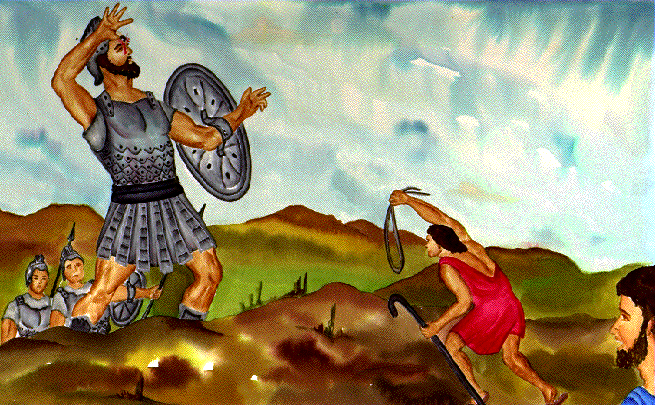
The first stone thrown at my previous Monster Trade Show post is always, "Yeah, well they're Monster," the detractor says with emphasis on the company name that conjures a giant Philistine of a corporation. And I have a follow up to this implication that we should all remember from David & Goliath: Size doesn't matter. That's what I reminded myself as I was standing there staring at their both like some sort of brand stalker.

At the end of the day, the magical part of what was happening at that booth had nothing to do with how big a company Monster is. Sure the war chest helps launch an effort like that but they have something more important and more rare than money -- acceptance of BIG ideas. These big ideas yield remarkable results. And you don't have to be Monster-sized to yield remarkable results.

A company of one has the capability of producing a trade show presence like Monster's. Careful now, I don't mean literally a 20' x 40' island booth with t-shirts, parties, and limos. I mean a trade show strategy that, at its own scale, is remarkable and keeps the show buzzing in its own way. All you need is acceptance of some big (and perhaps even crazy) ideas to help your idea stick in the minds of the attendees.

Remarkability defies size.

Case in point, a recent favorite of mine was a small company that put a new spin on the ubiquitous iPod giveaway. They had about twenty of them stacked up at their booth inviting salacious glances from passersby. But the real magic came not from the Pyramid-o-Pod but rather from what you had to do to get one.

In your bag of conference goodies was a button. Nothing fancy just a plain ol' button with the company name on it and their new slogan. With the button came instructions to wear this throughout the conference because they would have their reps walking around and at certain times their boss back at the booth would call one of these reps on their cell phone. Upon receiving the call, the rep was instructed to give an iPod to the first person they saw with the button on.

The results: Everybody was wearing the button all of the time! Plus, you wanted to be near this company's reps on the off chance that if they got the call you'd get the iPod (you should win some type of a marketing award for inventing a scheme that makes a consumer want to be near a sales rep). Finally, it created an 'active' buzz around this company and their presence at the show. To put it another way: they had it "goin' on." Simple and remarkable. Who can't make a few hundred buttons and buy some iPods?

The Point? Size doesn't matter. Remarkability trumps all. You have the power to be like Monster et al. if you open yourself up to the permeation of BIG ideas that your marketers are probably trying to sell you on for something or other right now.

P.S. I often speak of remarkability and to not feel like a hack, I have to plug Seth Godin's book Purple Cow which defines the concept of building remarkability into your business plan. If you do one thing for me (besides reading this blog), read this book!

Friday, June 02, 2006

Words on Work

Recently I got an info kit from the ad agency Energy BBDO. In the prospectus it contained a remarkable bit of copy that sums up the value of creating advertising for a client and I can't get it out of my head:
The Work. The Work. The Work. - In the tradition of all BBDO offices, we are dedicated to producing work that meets a high standard of creative excellence. After all, the work is where the brand meets the consumer. It touches their hearts and minds. And it is what leads to the sale.
Remarkable. I've been doing this for several years and I've never heard the urgency and importance of advertising summed up quite so eloquently as that second sentence. It's "where the brand meets the consumer."

The Point? Remember that your advertising campaigns are on the front lines with your customer. Pretty simple when you think about it.

Monday, April 24, 2006

Everything is Connected: Email to Blog to Book

I can't remember what movie recently featured the tagline 'everything is connected' but I'm co-opting it here to make my point about how you can spread your ideas incrementally across media. Take these three commonly used marketing pieces:
  • Email newsletter
  • Blog
  • Book
Alone, each of these items is a finite vehicle for you and/or your company's ideas. However, if you undertake the simple task of connecting them you can create a lean, mean marketing manifesto and quickly ensure the spread of your ideas.

How? I'm guessing, like so many out there, you collect customer email addresses and someone has said "we need to send out an email newsletter." So every quarter/month you are scrambling around for relevant content for your e-newsletter so that you can dredge up something to say to your customers.


Fast forward a couple of years when blogs crop up and, again, someone at the marketing round table said "we need to get us one of those." So now you're blogging. You now have two content driven pieces struggling for relevant content.


But what if you take a step back and tie these two pieces together. Janine Popick, CEO of VerticalResponse, my favorite email ASP, does just that. Every month she sends a newsletter that has a teaser to one of her recent blog posts that links to the blog site. And, as we all know, once you click through and read her blog how likely are you stay on her site ...?


Brilliant, right? So then you follow this thing through to it's next logical conclusion and you take your best blog posts and assemble a book like Seth Godin is doing with his upcoming book Small Is the New Big. Really, previewing potential book content on a blog gives you great insight into what your audience wants to hear from you. If I'm not mistaken "Small Is the New Big" was Godin's most popular blog post and is thus the central idea of his latest manifesto.


The Point?
Connect your messaging dots. We spend so long searching for content for emails, blogs, books. Why not use one as a spring board to another and another. If you can get your message firing on all pistons, your ideas can build like a mighty snowball! I'd better get out of here before the metaphor police arrest me.

P.S. If you were really paying attention, I'm sure you noticed the key ingredient that I glazed over: the simple fact that you must have something relevant to say to your audience. This whole rant is null and void if you don't have a message. So ... uh, get one. Easier said than done. More on that later.

P.P.S. "Everything Is Connected" was Syriana's tagline but since I can't really connect this marketing riff to oil I'll bow out gracefully.

Friday, April 14, 2006

Don't Forget Your MAP

When I develop a marketing plan, I call it a MAP -- a Marketing Action Plan. It's a pretty simple acronym and metaphor. You use your MAP to get where you're going and you can refer to it when you get lost. It should state some background (how you got here), your objective (what you want), and, of course, how you're going to go about getting it (your strategy and tactics).

It's the last part that, the strategy and tactics, that adds the ingredient of action and makes this thing a living, breathing document that guides you throughout your campaign or project.

Is it a locked, concrete document? No. What makes it breathable is that if something changes as you begin you can go in and modify your map (OK, so the changeable part breaks the map metaphor a bit -- bear with me). You have to be a cartographer during your journey (there!).

The Point? Just a name? No, it's more important than that. It's a label. And labels are important because they get your head in the right place. By the right place, I mean a place where you can take action. And action is where it's at. A map is your tool to get somewhere!

Monday, March 13, 2006

'P' is for Portman, 'V' is for Viral


Anyone watching Saturday Night Live on March 4 caught Natalie Portman's hilarious rap video (part of SNL's new digital short series -- lately one of the highlights of the show) in which she sends up her good girl image.

Or, if you're like me, try as you may have, you still fell asleep and missed it. So on Monday morning a friend emails it to you -- posted on YouTube or any other third party video site -- and you bust the aforementioned gut. Later you want to pass this funny bit of media on to another friend and go back to the site and find it yanked. The owner (NBC) has been policing and has ordered the content removed.

Bad for you. Good for NBC. Actually, once you snoop a bit, it turns out to be good for you both.

Good for them, not only for posting it on their own site but for adding a feature that encourages you to email it to a friend ... using the NBC website, of course. So now both you and your friend are frequent flyers on NBC.com. Plus, you've now been primed for when this situation comes up again and you hear about a new SNL video or see it and want to pass it on, you know that NBC.com is the place to go. While you're there you may even end up seeing who's hosting next week. Or watching more content. Or any number of activities that could lead to you becoming an even more loyal SNL customer. Smart.

The Point? If you see a trend out there such as people spreading free video online or any situation where your customers are engaging friends and colleagues about your product, find a way to include yourself in the loop and join the conversation.

Thursday, March 09, 2006

Got 48 Minutes and One Second?

If so, watch Seth Godin's speech to the staff at Google. Sit back and enjoy this master class in which one of my favorite marketing gurus covers everything from the fall of the TV Industrial Complex to Permission Marketing and Purple Cows. And best of all it's FREE!

The Point? Take a minute (or 48:01!) and recommit yourself to being a life long learner.

Monday, November 28, 2005

2 Groups of People

Recently, I switched jobs. As a marketer, I was faced with the task of preparing items for my successor while concurrently planning my own agenda as someone’s successor.

As I thought about the quandaries faced by both myself and my successor — how to get up to speed and synthesize data to market an unfamiliar product — I realized that essentially this daunting chore comes down to forging strong relationships with two separate but equally important groups of co-workers.

In a recent post, I mentioned a quote that cited essential pieces of knowledge that all marketers need to create a truly product-centric marketing program — information on the products and the customers. The following two groups of people can help you get both.

Product Development
The people who create your product give you invaluable insight on many of the questions that you need answers to. This product had to be developed for a reason. These are the people to ask. What’s different about the way we make our widget? Is there a secret sauce? It will soon be your job to communicate all of these ideas to the marketplace. You need to soak up as much information from this group as possible.

Sales/Customer Service
I lump these two groups into one super group because titles and org charts aside, basically what I’m saying here is that the second group is the staff on the front lines with your customers. The yin to product development’s yang, these individuals have a unique understanding for why your customers need your product.

And yet it goes beyond that. They know about the market’s values too. They know they don’t just want a better widget. They want a better widget so they can make their lives or the life of their business better. Your front line staff is key to helping you translate the product’s features into a compelling solution that will appeal to your market.

The Point? The whole ‘2 groups of people’ idea initially struck me as a big ‘duh’ but the more I thought about it, the more imperative it became to concretize this concept. Plus, after you mentally label these co-workers as a resource, you then prime your brain to catalog each encounter with these invaluable individuals as an important experience.