
Showing posts with label Creativity. Show all posts
Showing posts with label Creativity. Show all posts
Wednesday, March 04, 2009
Favorite Things: Direct Mail Done Right
"You've got to see this," said my friend and colleague Don as he slid one of the most engaging pieces of direct mail that I've seen in a long time across the table ... Hear my quick take in the video above. Here is the PURL (Personalized URL) used in the campaign – www.AcceptTheInvitation.com/DonaldCarstensen. An interesting takeaway? With campaigns like this, direct snail mail is almost becoming a boutique media for very small personal campaigns.


Monday, February 23, 2009
Ads That Move the Needle
 This morning Advertising Age reported that the Miller High Life one-second Super Bowl ad has created a year-on-year sales bump for the brand affectionately referred to as "the champagne of beers." The real kicker is that NBC didn't even air the one-second ad in some larger markets including New York, Chicago, and LA as they didn't want to discourage marketers who "followed the rules" and bought traditional :30s and :60s like they were supposed to. "We definitely sold more beer," said the High Life brand manager. And isn't that the point? Forget what NBC and anyone in the establishment says they are supposed to do. Their job is to sell more beer and that ad did it. Compare the one-second Miller bought for High Life to the four and a half minutes Anheuser-Busch bought. Talk about ROI ...
Contrast this with all of the red carpet-like reviews ads are given during high profile events like the Super Bowl and the Oscars (even on this blog every now and then). Sure, it's a fun conversation to have but it's like like having a sports discussion about which team's uniforms are the most aesthetically pleasing. It's secondary. The team with the most points at the end of the game wins, just as the ads that sell ultimately win.
We can talk endlessly about how the fan-created Doritos ad was voted as the most popular pick by USA Today and YouTube but I wonder if they sold more chips ... My own personal aside is that I think anyone can write a funny sketch with someone getting a ball to the crotch but I think it takes a professional to move the needle and sell some chips.
Moving the needle is what it's all about — not making clever, sexy ads. You need to sell more chips, beer, online job services, or whatever your particular widget may be. That's not to say that you can't be creative in the process but you can't simply be creative for the sake of being creative and hope by accident that some chips get sold. I also say moving the needle because results can come in lots of shapes and sizes — sales dollars, units sold, website traffic, etc.
Ultimately I think that's the difference between a professional sales and marketing strategy and writing a skit for the school talent show. Buying a one-second spot was a gutsy, creative move. It had people talking about it and anticipating it not to mention it was cost-effective, moved product and ultimately demonstrated ROI. It's not an easy thing to do but I think sometimes it can look easy. At a glance it's a funny guy shouting "High Life" that literally passes in the blink of an eye but in the boardroom post-mortem it is an objective achieved.
Photo credit: Rebecca.. via Flickr
Sunday, February 08, 2009
Selling Frozen Peas 101
Nick recently discovered an old favorite of ours was on YouTube (above). No, not a favorite TV show or movie, but a short recording of outtakes of Orson Welles recording commercials for a frozen food company. I’ve had a cassette recording of this for many years, and its good listening from time to time to help keep us agency types grounded.
It’s only four minutes, but it gives a great microcosm of an agency/talent relationship gone wrong. I don’t know the back story on this actual relationship, I doubt few people do. But there are some easy conclusions to be drawn, and lessons to be learned.
- If you’re going to hire someone famous as your spokesperson, bring them into the circle. They may not want to be in the circle, but at least make that effort. Educate them about your product; even bring them into the creative process – again, if they wish. Then, when you step into the recording studio you’re all working toward the same goal.
- Make sure they are at ease with the copy. This goes back to involving them in the process. Don’t put words or phrases in their mouth that they are not comfortable saying. My guess is that Mr. Welles saw this copy for the first time when he walked into the recording studio.
- Don’t over-coach. Would you try to tell Mickey Mantle how to hit? If you’ve done your job on points 1 & 2 this is a no-brainer. You’ve hired Orson Welles. Put him in the little room, close the door, and turn on the microphone. And, if you offer any direction at all, you certainly don’t start telling Orson Welles how to inflect. This is where they truly showed the “depths of their ignorance.”
- And, last but not least, remember it’s advertising – not Shakespeare. These guys looked upon their words as sacred poetry – which is why Mr. Welles so heartlessly reminds them that they’re talking about frozen food.
Thursday, January 11, 2007
Sprinkles the Wonder Dog
Today I had lunch at Panera. After ringing me up the clerk said, "What can I call out when your order's ready?" What an opportunity! What can you say? How about "Hoochie mamma." Holler out hoochie mamma when my order is up! Or some other bit of nonsense. How fun would that be?
Now I know this was all the accidental result of this guy's phrasing but I've always wondered why they just ask for your name at a lunch counter. Why not ask for something fun like your pet's name? Or your wildest dream? When your soup and sandwich is up they shout out "I wanna be spaceman!" or "Sprinkles the Wonder Dog!" Insane? A little bit. Remarkable? Oh yeah. People wouldn't forget your company's service and the treat it is to do business with you.
A little over a year ago, I wrote about maximizing your touchpoints. In a roundabout way I guess this is just a little reminder to look for all of the pockets in your customer communications where you can sneak in a bit of remarkability. A lot of time it costs nothing and pays off in exceptional brand loyalty.
Tuesday, January 09, 2007
The Swing Marketing Advertised
 If you haven't seen this already, check out this hilarious take from Project Cartoon. Jaded or frighteningly realistic? You be the judge.
This site is also a fun example of letting users under the hood to play around. If you click on the 'Create' link you can modify the 'toon and save it to a unique url that you can give to your friends who in turn will send it to their friends and ... I guess it's also an example of viral marketing. The real kicker? The cartoon's content itself isn't original to the site. It's a pretty prevalent cartoon. What's original here (beyond the funky Simpsons-esque design) is that it's user based and can truly grow like an open source project. The cartoonist is even adding new cells from users to subsequent versions.
Monday, August 07, 2006
The Little [BLANK] Book of [BLANK]
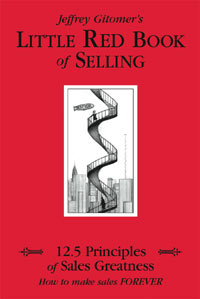 Want a short cut to titling/writing a book? Come up with a color and a subject of interest and you're halfway there (provided it's a specialty you know something about). Let's play ...
Color - Green; Subject - Landscaping =
The Little Green Book of Landscaping
Color - Orange; Subject - Spreadsheets =
The Little Orange Book of Spreadsheets
Color - Puce; Subject - Pool Skimming =The Little Puce Book of Pool Skimming
Laugh but these formulaic titles are everywhere. If you want a digestible diatribe on a particular subject (especially aspects of business) you can easily run to your bookseller or Amazon and pick up The Little Red Book of Selling, The Little Black Book of Connections (same author), and The Little Blue Book of Advertising.
There's probably more. I know there are across topics. Wanna learn golf? Check out Harvey Pennick's Little Red Book. If you're feeling broad you can read the colorless but comprehensive Little Book of Food or The Little Book That Beats the Market.
Now these titles sound may sound dorky but the formula must be a successful one to merit the kind of play it's getting. Take it apart, though, and it's pretty simple to see why titles like this work:
'Little' implies that it's small and as few people read books anymore you may need to telegraph to the unidoctrinated that this book won't hurt you. Toss the color in and it sounds almost fun. Like a children's book (I think subconsciously this construction draws strength in it's motivational tie in with The Little Engine That Could). So we've communicated twice already that it's easy and we've added a dash of fun. 'Book of' is just the exposition leading up to your closer - the subject of interest. Not the most exciting part of all but if I need to step up my selling game, a title like this preceeding the subject helps the medicine go down.
When you look at it this way, it's kind of brilliant. This title formula is just a step above the lowballing and wildly popular Dummies and Idiots series (and I'm not turning my nose up - I just got the Idiot's Guide to Wine).
The Point? One of these books makes a respectable case for "thinking inside the box." Careful now. I'm not saying stifle creativity but rather there are tested formulas out there that are tried and true. You don't always have to reinvent the wheel. Save your wheelsmith-ery for when it's time to change the game entirely. And chances are that will be simply taking one of these tried and true methods and turning it on it's side.
Monday, July 10, 2006
Size Doesn't Matter
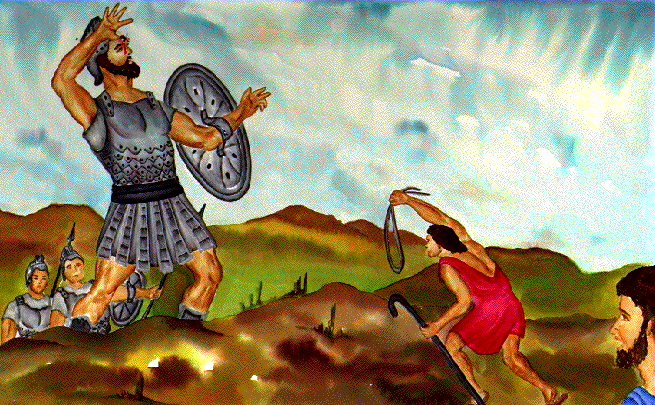
The first stone thrown at my previous Monster Trade Show post is always, "Yeah, well they're Monster," the detractor says with emphasis on the company name that conjures a giant Philistine of a corporation. And I have a follow up to this implication that we should all remember from David & Goliath: Size doesn't matter. That's what I reminded myself as I was standing there staring at their both like some sort of brand stalker.
At the end of the day, the magical part of what was happening at that booth had nothing to do with how big a company Monster is. Sure the war chest helps launch an effort like that but they have something more important and more rare than money -- acceptance of BIG ideas. These big ideas yield remarkable results. And you don't have to be Monster-sized to yield remarkable results.
A company of one has the capability of producing a trade show presence like Monster's. Careful now, I don't mean literally a 20' x 40' island booth with t-shirts, parties, and limos. I mean a trade show strategy that, at its own scale, is remarkable and keeps the show buzzing in its own way. All you need is acceptance of some big (and perhaps even crazy) ideas to help your idea stick in the minds of the attendees.
Remarkability defies size.
Case in point, a recent favorite of mine was a small company that put a new spin on the ubiquitous iPod giveaway. They had about twenty of them stacked up at their booth inviting salacious glances from passersby. But the real magic came not from the Pyramid-o-Pod but rather from what you had to do to get one.
In your bag of conference goodies was a button. Nothing fancy just a plain ol' button with the company name on it and their new slogan. With the button came instructions to wear this throughout the conference because they would have their reps walking around and at certain times their boss back at the booth would call one of these reps on their cell phone. Upon receiving the call, the rep was instructed to give an iPod to the first person they saw with the button on.
The results: Everybody was wearing the button all of the time! Plus, you wanted to be near this company's reps on the off chance that if they got the call you'd get the iPod (you should win some type of a marketing award for inventing a scheme that makes a consumer want to be near a sales rep). Finally, it created an 'active' buzz around this company and their presence at the show. To put it another way: they had it "goin' on." Simple and remarkable. Who can't make a few hundred buttons and buy some iPods?
The Point? Size doesn't matter. Remarkability trumps all. You have the power to be like Monster et al. if you open yourself up to the permeation of BIG ideas that your marketers are probably trying to sell you on for something or other right now.
P.S. I often speak of remarkability and to not feel like a hack, I have to plug Seth Godin's book Purple Cow which defines the concept of building remarkability into your business plan. If you do one thing for me (besides reading this blog), read this book!
Friday, June 02, 2006
Words on Work
Recently I got an info kit from the ad agency Energy BBDO. In the prospectus it contained a remarkable bit of copy that sums up the value of creating advertising for a client and I can't get it out of my head:
The Point? Remember that your advertising campaigns are on the front lines with your customer. Pretty simple when you think about it.
The Work. The Work. The Work. - In the tradition of all BBDO offices, we are dedicated to producing work that meets a high standard of creative excellence. After all, the work is where the brand meets the consumer. It touches their hearts and minds. And it is what leads to the sale.Remarkable. I've been doing this for several years and I've never heard the urgency and importance of advertising summed up quite so eloquently as that second sentence. It's "where the brand meets the consumer."
The Point? Remember that your advertising campaigns are on the front lines with your customer. Pretty simple when you think about it.
Wednesday, November 16, 2005
I AM a Designer (and You Should Be Too!)
 Molli with an “i” is a high school junior who recently job shadowed me for a brief portion of her day. As I talked with her about the minutia of my job as a marketing professional, I mentioned that my favorite part of the day is getting to work with both hemispheres of my brain — the right and the left. The creative and the analytical.
“It’s because you’re a designer,” said the very capable designer on the other side of my officle (slang: office + cubicle). I gasped. She was right. I knew she was right because …
Simply put, I love design. I hover over the aforementioned designer’s shoulder all the time and enjoy our collaborations. But it’s not just that. It’s not just thinking of design in the context of graphic design. It’s the reason I love Apple and Target and Old Navy. I love the role that design — in all of its forms — plays in the modern market.
The latter two brands mentioned above are perfect examples. More and more it’s becoming less and less about the quality or price of your product (anyone can and will make a better widget or a cheaper widget). The edge you give your products is its design. Its very essence.
“I’m glad you said it,” I said to my colleague. You see, I’ve always been worried that people would view me as a poser or a dilettante if I labeled myself as a designer so I always watered my explanation down with the generic phrase “I work with designers.”
No more. I have seen the light.
I am a designer because of what I told Molli with an “i.” The fact that, for whatever bipolar reason, my mind (and if you’re reading this, probably yours too) has the ability to toggle between both hemispheres and synthesize real-world data into complex, creative solutions. Right and left. Creative and analytical. Yin and yang.
I am a designer because I think like a designer and approach the world as a design challenge.
The Point? Embrace your inner designer and think of it as your badge of honor that says, “I get why it’s not just about price and quality and ease of use and service anymore.”
Subscribe to:
Posts (Atom)


