My blog has moved!

You should be automatically redirected in 6 seconds. If not, visit
http://westerad.com
and update your bookmarks.

Monday, July 10, 2006

Size Doesn't Matter


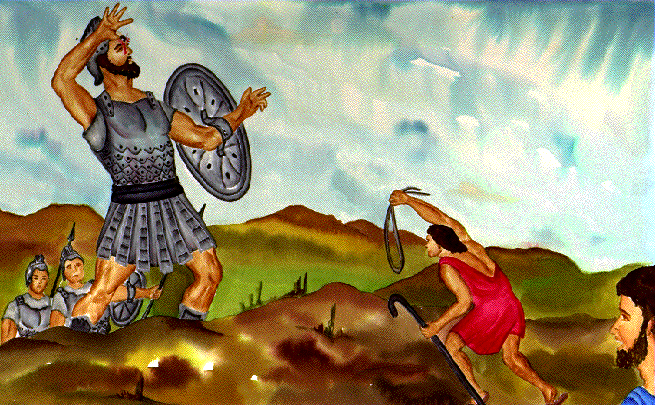
The first stone thrown at my previous Monster Trade Show post is always, "Yeah, well they're Monster," the detractor says with emphasis on the company name that conjures a giant Philistine of a corporation. And I have a follow up to this implication that we should all remember from David & Goliath: Size doesn't matter. That's what I reminded myself as I was standing there staring at their both like some sort of brand stalker.

At the end of the day, the magical part of what was happening at that booth had nothing to do with how big a company Monster is. Sure the war chest helps launch an effort like that but they have something more important and more rare than money -- acceptance of BIG ideas. These big ideas yield remarkable results. And you don't have to be Monster-sized to yield remarkable results.

A company of one has the capability of producing a trade show presence like Monster's. Careful now, I don't mean literally a 20' x 40' island booth with t-shirts, parties, and limos. I mean a trade show strategy that, at its own scale, is remarkable and keeps the show buzzing in its own way. All you need is acceptance of some big (and perhaps even crazy) ideas to help your idea stick in the minds of the attendees.

Remarkability defies size.

Case in point, a recent favorite of mine was a small company that put a new spin on the ubiquitous iPod giveaway. They had about twenty of them stacked up at their booth inviting salacious glances from passersby. But the real magic came not from the Pyramid-o-Pod but rather from what you had to do to get one.

In your bag of conference goodies was a button. Nothing fancy just a plain ol' button with the company name on it and their new slogan. With the button came instructions to wear this throughout the conference because they would have their reps walking around and at certain times their boss back at the booth would call one of these reps on their cell phone. Upon receiving the call, the rep was instructed to give an iPod to the first person they saw with the button on.

The results: Everybody was wearing the button all of the time! Plus, you wanted to be near this company's reps on the off chance that if they got the call you'd get the iPod (you should win some type of a marketing award for inventing a scheme that makes a consumer want to be near a sales rep). Finally, it created an 'active' buzz around this company and their presence at the show. To put it another way: they had it "goin' on." Simple and remarkable. Who can't make a few hundred buttons and buy some iPods?

The Point? Size doesn't matter. Remarkability trumps all. You have the power to be like Monster et al. if you open yourself up to the permeation of BIG ideas that your marketers are probably trying to sell you on for something or other right now.

P.S. I often speak of remarkability and to not feel like a hack, I have to plug Seth Godin's book Purple Cow which defines the concept of building remarkability into your business plan. If you do one thing for me (besides reading this blog), read this book!

Wednesday, June 28, 2006

The Monster That Ate the Trade Show

Recently I attended the national conference for SHRM, the Society of Human Resource Managers. A big player at this large conference was Monster.com. Given this audience's relevance to them, it was no surprise that they decided to own the show.

I had planned to summarize their strategy for you here but I found an article from Exhibitor Online that explains in great detail their Monster trade show strategy first established at SHRM a couple years ago. (Just change New Orleans to DC and you'd basically have this year's show.)

A top notch strategy by a top notch (and innovative) outfit.


I love trade shows for a couple of different reasons ...
  1. They're like marketing amusement parks
  2. They generate new leads and business but they also ...
  3. Provide important opportunities for brand interaction
It's this last point that gets to be sticky for Ricky ROI. You know the guy I'm talking about. The one at the end of the conference room table that questions trade shows all the time because of the sticker shock. Then you have to get into metrics that sell him on lead acquisition cost, etc.

Really, I think that lead acquisition can only be part of your objective at a trade show. There's something else at play on the trade show floor. It's several brands fighting for position in the already crowded real-estate of a consumer's mind. But at the end of the day, I think you've got to be there. (The caveat of course is that this is a relevant show to your audience, etc. A relationship that Monster has found with SHRM -- it just fits.) At some big industry shows you have to attend simply for perception. It tells your customer that you're a player in this market too.

After you make your case to Ricky ROI and you are resolved to attend, he will next try to flank you at the size and scope of your booth. "Just do a 10' x 10,'" he says, waxing budget management. I have a different axiom at this point: If you are going to go -- then GO! Once you've made the investment in a trade show, upping your real-estate is really a nominal expense and can beef up the perception of your company.

Finally, be like Monster. By that I mean, don't treat a trade show on your calendar like a meeting that you'll be attending. Treat it like an event or complex marketing campaign that you need to plan every detail of. Pre-show, on-site, off-site, post-show -- everything. Their simple act of sending limos to the airport to take arriving attendees to the conference hotels was a stroke of genius. With that they became my personal concierge for this show and were quickly on their way to owning the hearts and minds of many attendees.

After the personal experience one has interacting with a brand at a trade show (fun at the booth with giveaways and product demos, at off-site parties and functions, or even riding in their limos), I have all sorts of positive associations with Monster that Yahoo HotJobs and Career Builder will have a tough time un-doing.

The Point? Trade shows rock. Are they expensive: Hell yes. You can bleed money at these things. But if carefully strategized, you can knock the ball out of the park and get real results (for Ricky ROI) and brand equity (immeasurable -- sorry Ricky) that aren't possible with any other media.

P.S. I'm on a trade show bent. Please email me any great books about trade show marketing. They have to exist but none come to mind. It seems like a sort of bastard channel. I know there are mags like Exhibitor but I'm wondering if there is some book that is the cornerstone of this complex media.

Wednesday, June 21, 2006

The Internet Can Do Anything!! (Even Save Screech's House)

By even pointing this out, I realize that I'm being part of the problem but I like this story in a guilty pleasure kind of way.

You see the bank is foreclosing on Screech from "Saved by the Bell"'s house. What's Screech doing about it? Selling t-shirts on a website at $15 a pop to save his digs ($20 gets you one autographed by Screech himself). He is gonna have to move a lot of shirts to hit the $250,000 he needs but I don't want to underestimate the power of Screech's fame. Plus all of the recent press can't be hurting his cause. Actually that's what rockets this little fundraiser from gimmick to remarkable.


The Point?
This little parable illustrates a simple point: If Screech can use the internet to move the needle for his cause, you can too. I feel dirty for even saying it but
'Think like Screech.' (By the way that little axiom doesn't apply to anything else in life!)

Friday, June 02, 2006

Words on Work

Recently I got an info kit from the ad agency Energy BBDO. In the prospectus it contained a remarkable bit of copy that sums up the value of creating advertising for a client and I can't get it out of my head:
The Work. The Work. The Work. - In the tradition of all BBDO offices, we are dedicated to producing work that meets a high standard of creative excellence. After all, the work is where the brand meets the consumer. It touches their hearts and minds. And it is what leads to the sale.
Remarkable. I've been doing this for several years and I've never heard the urgency and importance of advertising summed up quite so eloquently as that second sentence. It's "where the brand meets the consumer."

The Point? Remember that your advertising campaigns are on the front lines with your customer. Pretty simple when you think about it.

Sunday, May 28, 2006

Coffee Posting #2

After my previous posting about Starbucks' magical copy, I must have been in a cup-reading type of mood ...

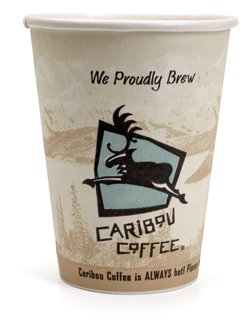
Truth be told, nowadays my wife and I actually more frequently get our daily java fix (she shuts down if she doesn't have her Vanilla Coffee Cooler, no whipped cream) from the newly opened Caribou Coffee. For those of you who don't know them (and you may not since they are only in a handful states), Caribou is number two in the gourmet coffeehouse biz. Think of them as Starbucks' quirky, socially conscious (cool positioning) cousin from the northwoods of Minnesota.

To be blunt they are second but it is a distant second to the clear market leader. But it's also a strong second. They have built a brand every bit as powerful as their erudite older cousin. Caribou's coffeehouses are like little lodges complete with faux fireplace, raw woodwork, and probably faux bearskin ottomans.

To do an apples to apples comparison with my previous post, how does their cup copy compare to the 'Bucks juggernaut?
You are holding our pride and joy

Hand-selected beans. Hand-crafted beverage.
It's in your hands now. Enjoy.
Not bad. And actually those simple phrases sum up their position in the market in an eloquent and concise fashion. They care about the coffee experience that Starbucks has sold us on. Pay a few bucks more and you enjoy a incomparable drinking experience. They acknowledge your involvement in this experience by referencing your enjoyment in tandem with their joy in creating it. The whole feel of their brand is targeted at coffee connoisseurs who may be after a more relaxed, lived in environment. Outdoorsy and soothing. Kick back by the fire and enjoy.

On a side note, their aforementioned social consciousness is easily felt with several signs proclaiming their support of social and agricultural responsibility in coffee production. Again, good differentiation but to be shrewd for a moment when they proclaim this so fervently it begs the question 'What does Starbucks do socially?' Probably a lot, perhaps even more given their size but they don't communicate it as prominently as Caribou and thus it escapes being a core component of their brand identity. To paraphrase James Carville, don't expect the public to know something unless you're willing to tell them.

The Point? There's something to be said for being a strong and respectable number two. In the end, you may even be number one in other measures that outweigh market leadership. Think Apple. Think Caribou. Think different. Happy Memorial Day!

P.S. I'll lay off the coffee posts for a while.

Saturday, May 20, 2006

Magical Copy

STOP THE PRESSES!!

A marketing blog about Starbucks' unequivocal branding? Really ...???


No, I'm not hurting for topics but I'm daring to tread where -- um, like, every other marketing wonk has tread before. The holy grail of branding: Starbucks.


On a recent business trip I was killing time while enjoying a cup of my favorite Starbucks brew (plain ol' house dark roast, black) and was bored enough to actually read my coffee cup. And what nuggets of info does the cup contain? Caution: Hot! (McDonalds, trying dodge yet another suit). A little diagram on how much ice to put in (Burger King. -- like someone doesn't know? Like you could maybe mess that one up?? I digress). No, the copy on the Starbucks cup simply read:

There is a hidden magic in Starbucks coffee; proper brewing releases the subtle bouquet of flavors stored in each bean.
Wow. That, my friend, is why we pay 3-4 times more for Starbucks. With a story like that how could you possibly get anything else? Or, conversely, how could you not believe that Starbucks' coffee is better? This cup (a cup for crying out loud!) can teach us so much:
  1. Talk about Copywriting 101. Take note: the imagery, the heightened language.
  2. Not to mention Branding 201: Never underestimate any little bit of packaging. We all know it would be easier, cheaper, etc. to just order plain old boxes. But if you go that extra mile you could have a customer for life.
  3. Finally it drives home either Tom Peters' WOW! Factor or Seth Godin's Purple Cow. Take your pick ...
The Point? Go there. Write magical copy. Create transcendant products and services. You don't just sell widgets! You sell an experience unlike any other. And if you don't believe that, well then, they'll always be a need for someone at the bottom for the people at the top to look down on. Oh, that and whatever you currently pay your copywriter ... double it and see what happens.

P.S. Just to show you the perceived value of the Starbucks cup with its magical copy ... While I was searching for an image for this post my Google image search brought up dozens of cups that people had taken pictures of and posted. The cup and its ideas have enough value for people to want to share them with their friends. Wow, indeed.

Monday, May 01, 2006

A Revealing - CORRECTION - Unveiling Look at Branding


I let out an audible "Wow" at the grocery store this afternoon when I saw how closely my regional chain had mirrored the packaging of GE's Reveal bulbs with its store brand.

This couldn't be a more timely discussion on the importance of design in branding. As I've said many times before, nowadays, everyone has to be a designer.


I also call this observation timely because I am reading Phil Dusinberry's agency memoir Then We Set His Hair on Fire. It's a great read. Among other topics, the author covers his work for GE with the "We Bring Good Things to Life" campaign. This illustrates the core credo of advertisers -- that brand building leads to overall equity and loyalty that creates lifelong users. According to Dusinberry, I should buy the Reveal bulbs just because they say GE and keep buying them for life.

Here's what's really happening. The first time I bought the bulbs, it was partially because of the GE brand and their commitment to innovation. And these bulbs live up to that -- the light is truely whiter. But the next time I went to buy them, I already knew I was pleased with this bulb but I found a generic counterpart for half the price. What could GE have that the store brand doesn't? Probably a lot but the packaging and it's superb design moves it into the same category as GE and helps resolve that dissonance.

The Point? I'm not saying we throw branding out with the bathwater. I think that it's an important tool in builing a remarkable company. But you also have to foster innovation, creativity, AND design (!) at every level in your organization and then keep on innovating after you've done it once or twice. Because you can't rest on your brand name and expect the masses to keep paying twice as much for your bulbs.